Swiss AgTech Vivent Biosignals brings AI technology that gives plants a “voice” to Argentina
The Swiss company uses artificial intelligence to interpret plant biosignals and turn them into actionable information for growers. Already operating in more than 25 countries, Vivent Biosignals is expanding into Argentina as agriculture becomes a new frontier for real-time biological data and AI.

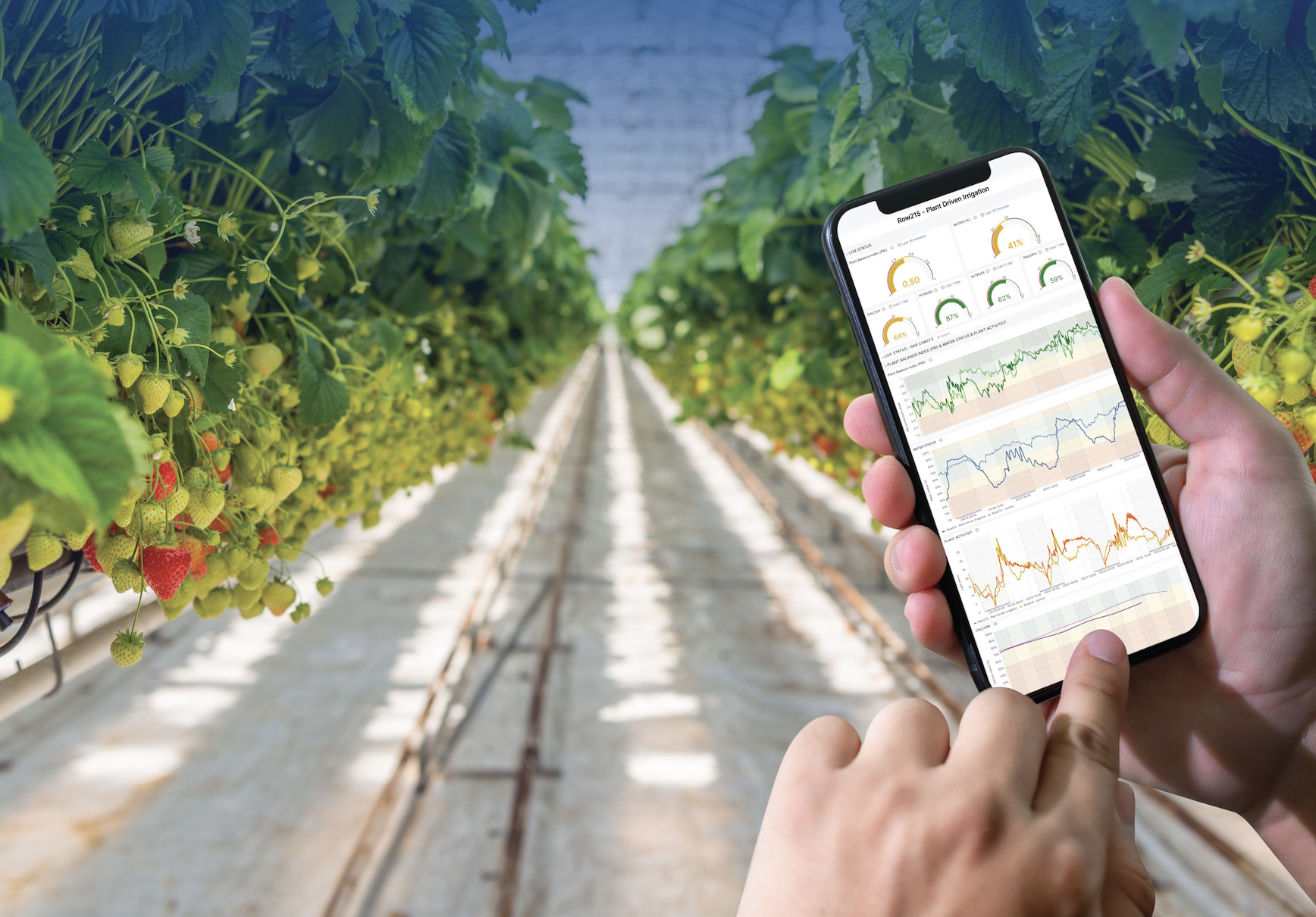
Swiss AgTech company Vivent Biosignals is expanding into Argentina with a technology that combines plant biosignals and artificial intelligence to monitor crops and translate their biological responses into information that farmers can understand and use, bringing a new approach to precision agriculture into one of the world’s major agricultural markets.
The concept sounds almost futuristic: allowing plants to “communicate” what is happening to them. Rather than waiting exclusively for visible symptoms or relying only on conventional measurements, Vivent Biosignals captures signals generated by plants and uses technology to interpret those responses, creating another layer of information about crop conditions.
Artificial intelligence plays a central role in that process by helping transform complex biological signals into actionable information. The objective is not simply to generate more agricultural data, but to make the plant itself a source of information that can contribute to decisions in the field.
Vivent Biosignals already operates in more than 25 countries, and its arrival in Argentina adds one of the world’s largest agricultural producers to its international expansion. The company also has a direct connection with the country through Fernando Derossi, an Argentine executive who became global CEO and partner in 2026 to lead its next phase of growth.
The move comes as artificial intelligence spreads rapidly beyond generative applications and into industries where real-time data can directly influence productivity. Agriculture is emerging as one of the most significant examples, with AI increasingly combined with sensors, satellite imagery, weather information, biological data and predictive systems to help producers understand what is happening in crops before problems become more costly or difficult to manage.
Vivent Biosignals turns plants themselves into a source of agricultural data
The approach developed by Vivent Biosignals adds a new dimension to agricultural monitoring. Farmers have progressively incorporated weather stations, satellite imagery, soil analysis, machinery data and digital platforms into production management. Biosignals introduce another variable into that ecosystem: the physiological responses generated by plants themselves.
The challenge is making those responses intelligible.
Plants constantly react to changes in their environment and growing conditions. Capturing biological signals is one part of the equation; interpreting the enormous amount of information they generate and transforming it into something useful for agricultural decision-making is another. This is where artificial intelligence becomes particularly relevant.
The technology therefore points towards a broader transformation taking place in precision agriculture. The first wave of agricultural digitalisation dramatically increased the amount of data available to producers. The emerging challenge is to make that information easier to interpret and more directly connected with operational decisions.
Argentina provides an attractive environment for that proposition. The country combines extensive agricultural production with a long history of technological adoption, from no-till farming and biotechnology to satellite monitoring, digital management platforms and precision agriculture.
Its scale is equally important. As a major global producer and exporter of soybeans, corn, wheat and other agricultural commodities, Argentina offers technology companies the possibility of applying new solutions across extensive farming systems where relatively small improvements in productivity or resource efficiency can have significant economic consequences.
For Vivent Biosignals, entering Argentina therefore represents more than adding another country to its international footprint. It provides access to a sophisticated agricultural ecosystem where producers routinely evaluate technologies according to their ability to generate measurable agronomic and economic results.
That will also be the central test for biosignal technology. The commercial value of allowing crops to “communicate” will ultimately depend on whether that information enables producers to identify problems earlier, improve decisions or manage resources more efficiently.
The potential applications are particularly relevant as agriculture confronts increasingly complex variables. Extreme weather, water availability, input costs and pressure to improve environmental performance are forcing producers to obtain more output from resources that must be managed with greater precision.
In that context, information obtained directly from the biological behaviour of crops could complement the data farmers already receive from the surrounding environment.
Argentina becomes part of a wider European AgTech expansion
Vivent Biosignals’ arrival also illustrates a broader connection developing between European agricultural technology and Latin American farming.
Europe has built a growing ecosystem around artificial intelligence, biotechnology, robotics, sensors and climate technologies. Latin America, meanwhile, offers some of the world’s largest agricultural production systems and a substantial need for technologies capable of increasing productivity while improving the use of water, land, fertilisers and other inputs.
Argentina sits at the intersection of those trends. Its agricultural sector has traditionally shown a high capacity to adopt technologies when they demonstrate a clear economic advantage, making the country an important market for international AgTech companies seeking scale.
The expansion of AI into agriculture is also changing the competitive landscape. The amount of data generated by farms has increased dramatically, but accumulating information is no longer enough. The next generation of agricultural technology is increasingly focused on interpretation, prediction and decision-making.
Vivent Biosignals approaches that challenge from the plant itself.
Instead of observing crops exclusively from above through satellites, from below through soil sensors or through external environmental measurements, its proposition adds biological information generated by the crop to the digital picture available to producers.
That distinction could become increasingly relevant as precision agriculture moves towards more integrated systems capable of combining multiple sources of information.
For Argentina, the arrival of Vivent Biosignals adds another international player to an AgTech ecosystem where agriculture, biotechnology and artificial intelligence are increasingly converging. For the Swiss company, it opens the door to a market where agricultural scale can put the technology to the test under demanding commercial conditions.
The broader transformation goes beyond a single company. Artificial intelligence is progressively changing the relationship between farmers and the enormous volume of information generated across their fields.
If biosignal technologies can successfully translate the biological responses of crops into useful decisions, the next frontier of precision agriculture may not simply be observing plants more closely. It may be learning how to listen to them.