Greenland could emerge as a new helium supplier for Europe as EU seeks to reduce critical resource dependence
The Tunu project in East Greenland has identified naturally occurring primary helium concentrations of up to 0.8%, while preliminary studies point to the possibility of combining helium production with geothermal energy. The discovery comes as Europe seeks more resilient supplies for semiconductor manufacturing, medical imaging, aerospace and quantum technologies.

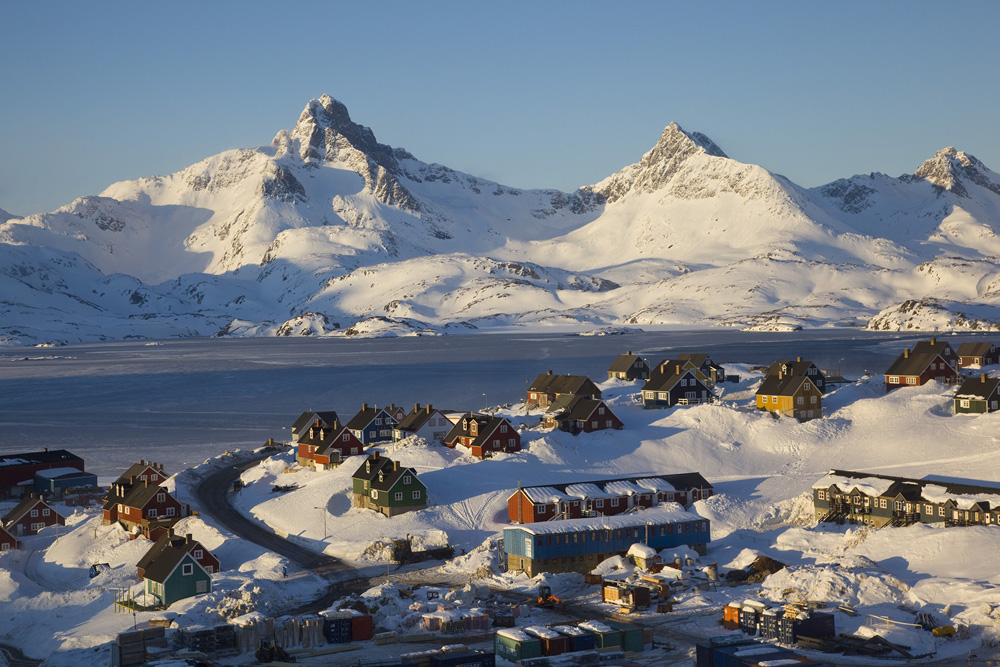
Greenland's vast mineral potential is attracting renewed European attention, but one of the island's potentially strategic resources is neither a rare earth nor a conventional metal. Helium, an irreplaceable input for some of the world's most advanced industries, could turn East Greenland into a new supply point for European markets at a time of growing concern over the concentration and vulnerability of global production.
Pulsar Helium is advancing its wholly owned Tunu project in the Liverpool Land region of East Greenland, where surface sampling has detected naturally occurring helium concentrations of up to 0.8%. Unlike most of the helium currently produced worldwide, the gas identified at the site is not associated with hydrocarbons, raising the possibility of developing a dedicated primary-helium operation rather than recovering the element as a by-product of natural gas production.
The project remains at an exploration and assessment stage and commercial production has not yet been demonstrated. Nevertheless, its location, geological characteristics and proximity to European markets give it strategic relevance precisely when the EU is trying to diversify access to materials essential for its technological and industrial base.
The issue extends beyond helium itself. A recent study commissioned by the European Investment Bank concluded that Europe has considerable untapped mineral potential but has invested too little in exploration for decades. EU exploration expenditure currently stands at only around €200 million annually and would need to increase tenfold to approximately €2 billion a year over the next five years to help support the domestic extraction objectives established under the Critical Raw Materials Act. In 2024, the EU attracted just 3% of global mineral exploration budgets, compared with 20% for Canada and 16% for Australia.
Although helium was not one of the materials specifically assessed in that EIB study, the same strategic problem is increasingly visible in its supply chain: Europe depends on a limited number of producing countries and facilities for a gas that cannot easily be substituted in several high-value applications.
Why helium has become strategically important for Europe
Helium's best-known characteristic is its extremely low boiling point, but its industrial value is much broader. The gas is essential for cooling superconducting magnets used in MRI scanners, while high-purity helium is employed in semiconductor manufacturing, aerospace applications and scientific research. Helium and helium-3 are also becoming increasingly relevant for quantum technologies, adding another layer of strategic importance as Europe attempts to strengthen its position in advanced computing.
The problem is that the supply chain is highly concentrated. More than 95% of global helium is currently produced as a by-product of natural gas and LNG, according to Pulsar, meaning output is frequently determined by hydrocarbon production economics rather than by actual helium demand. Major production is concentrated in a relatively small number of countries and facilities, including the United States, Qatar and Algeria.
Recent disruptions have demonstrated the vulnerability of that structure. TradeArabia reported that an interruption in Qatar earlier this year temporarily removed close to one-third of global helium production, while Russia introduced export restrictions in April and China imposed a temporary export ban in July. These developments intensified pressure on industries dependent on high-purity helium and strengthened the case for geographically diversified sources closer to major consuming markets.
For Europe, that matters particularly because many of the industries consuming helium sit at the centre of the bloc's strategic agenda. Semiconductor manufacturing, healthcare technology, aerospace, scientific infrastructure and quantum computing are all areas in which the EU is seeking greater technological sovereignty.
Tunu could therefore offer something different from the conventional helium supply model.
Pulsar holds an exploration licence covering 62 square kilometres in East Greenland and says it is the first company licensed specifically to explore for helium in the territory. Sampling conducted at the Kap Tobin prospect identified helium concentrations ranging from approximately 0.36% to 0.82%, while seismic and geological work subsequently identified subsurface structures that could potentially store and channel helium-rich fluids.
An independent pre-feasibility assessment carried out by Sproule-ERCE also identified evidence of an active geothermal system beneath Liverpool Land. Estimated reservoir temperatures range from around 80°C to 130°C, creating the possibility that the same project could eventually combine helium extraction with geothermal electricity generation. Under a higher-case modelling scenario, potential helium recovery was estimated at roughly 350,000 cubic feet per day.
That combination is particularly relevant because helium separation and processing require energy. If the geothermal resource proves commercially viable, it could provide electricity for the processing facility while potentially supplying cleaner power to the nearby settlement of Ittoqqortoormiit, approximately 7.5 kilometres from Kap Tobin and currently dependent on diesel generation.
The concept would therefore link two resources within the same development: primary helium destined potentially for European industrial markets and geothermal energy supporting both extraction and local electricity demand.
Greenland moves closer to Europe's strategic supply chain
Greenland is not a member of the European Union, but its political and economic relationship with Europe makes the project particularly relevant from a supply-security perspective. The EU and the Government of Greenland have established a Strategic Partnership on Sustainable Raw Materials Value Chains, designed to deepen cooperation and potentially integrate Greenlandic resources into European industrial supply chains.
The partnership explicitly recognises Greenland's significant resource potential and Europe's demand for critical raw materials, as well as European expertise in exploration, extraction, processing and refining. For Brussels, the broader objective is to reduce exposure to concentrated suppliers while strengthening the resilience of industries required for the green and digital transitions.
Infrastructure could also gradually become less restrictive. Greenland and Denmark are supporting construction of a new airport at Ittoqqortoormiit, with works expected between 2026 and 2029. Its proximity to Tunu could improve year-round access to an area currently constrained by seasonal maritime transport and charter aviation, potentially reducing future exploration and development costs.
However, substantial uncertainties remain before Tunu can be considered a future helium mine. The underground reservoir still needs further evaluation, flow rates have not been demonstrated at commercial scale and additional surveys and drilling will be required. The pre-feasibility work itself warns that project economics depend heavily on the size and connectivity of underground fractures: lower permeability could reduce both helium recovery and geothermal output.
That distinction is crucial. Greenland has potential, not yet a proven commercial solution to Europe's helium dependence.
Even so, the project illustrates why exploration is returning to the centre of European industrial policy. The EIB argues that increasing spending alone will not be enough: Europe also needs better geological information, more predictable permitting, targeted financial incentives, stronger public understanding of raw-material projects and greater use of technologies such as artificial intelligence, remote sensing and advanced geological modelling.
For the EU, the strategic calculation is increasingly straightforward. Building semiconductor plants, quantum computers, advanced medical equipment and aerospace capabilities requires not only capital and intellectual property, but also secure access to the physical materials that make those technologies possible.
Greenland's Tunu project is still years away from answering whether its helium can be produced economically and at meaningful scale. But its emergence comes at an unusually favourable geopolitical moment. As established supply chains become more exposed to export restrictions, production interruptions and strategic competition, a primary helium source on Europe's Arctic doorstep could become significantly more valuable than its production volume alone would suggest.