Latin American investment in Spain reaches €79.4bn, led by Mexico
Latin American companies now account for 11.5% of Spain's foreign direct investment stock and support 72,000 jobs, according to Global LATAM+ 2026. Mexico leads the investment ranking, followed by Argentina, Colombia and Brazil.

Latin American investment in Spain has reached €79.36 billion, an increase of 141% since 2010, reinforcing the country's role as a major European destination for capital originating from across the region.
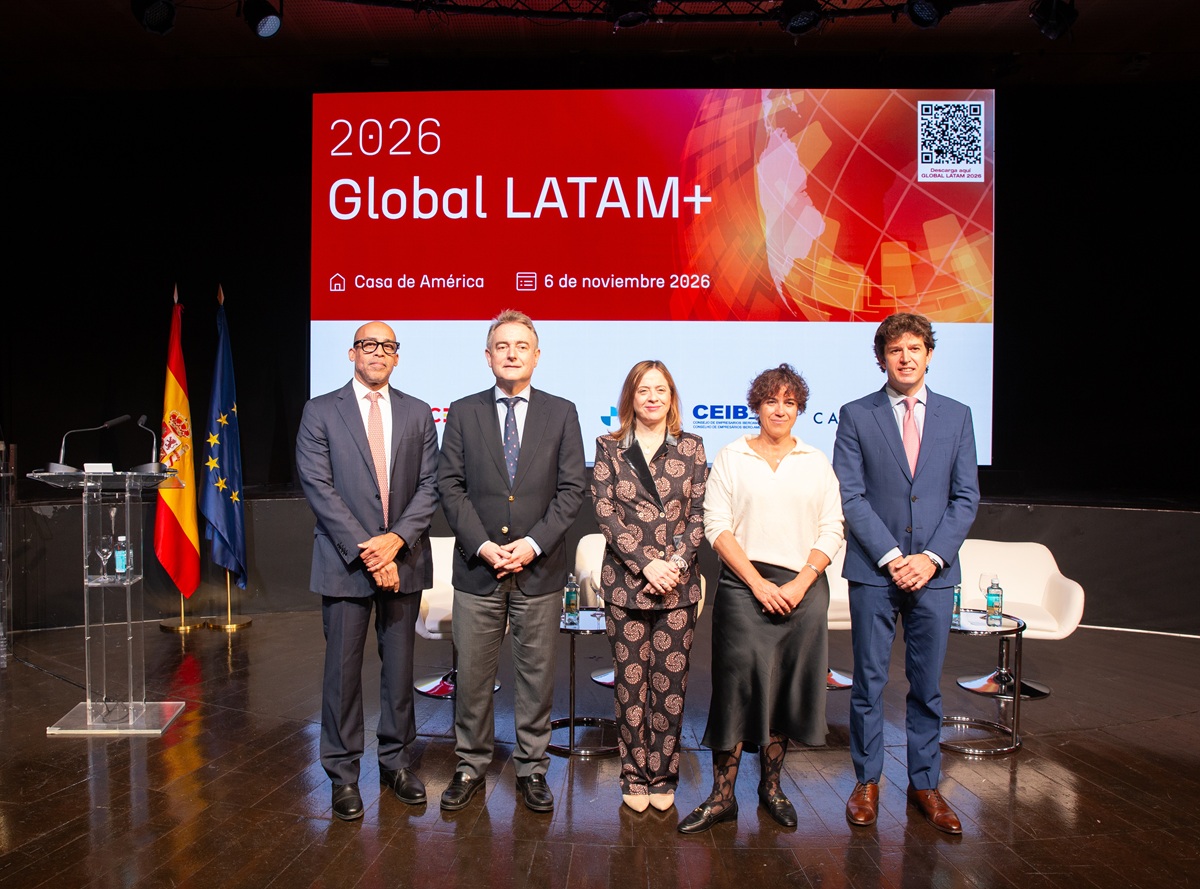
The accumulated investment represents 11.5% of Spain's total foreign direct investment (FDI) stock and supports approximately 72,000 direct jobs, according to the eighth edition of the Global LATAM+ report, presented on November 6 in Madrid.
The study, led by ICEX-Invest in Spain with the support of the Ibero-American General Secretariat (SEGIB) and the Inter-American Development Bank (IDB), examines Latin America's growing international investment presence and the economic relationship between the region, Spain and the European Union.
Presented at Casa de América, during an event opened by Spain's Secretary of State for Trade, Amparo López Senovilla, the report highlights a structural transformation in transatlantic investment flows.
While Spanish multinational companies have historically maintained a significant presence across Latin America, businesses from the region are increasingly establishing their own operations, investing in Spanish industries and using Spain as a platform for international expansion.
The figures also reveal that investment is extending beyond traditional industrial holdings into technology, financial services, food production and business services, reflecting the internationalisation of a more diversified Latin American corporate sector.
Mexico leads as technology and industry attract capital
Mexico remains the largest Latin American investor in Spain, with accumulated investment of €37.44 billion, accounting for approximately 47% of the regional total.
It is followed by Argentina, with €12.32 billion; Colombia, with €9.23 billion; and Brazil, with €6.27 billion.
Together, these four economies account for most of the Latin American capital invested in the Spanish market, although their investment profiles vary significantly.
By sector, the largest accumulated positions are concentrated in the manufacture of other non-metallic mineral products, with €20.69 billion, followed by metallurgy (€6.16 billion), real estate (€6.06 billion), financial services (€5.64 billion) and food manufacturing (€5.46 billion).
These figures illustrate the importance of industrial and established corporate investments, but the report also points to the growing presence of Latin American companies developing new operations in Spain.
Global LATAM+ identifies 335 greenfield investment projects from the region, a category covering new business establishments and activities rather than acquisitions of existing companies.
By number of projects, Spain ranks as the second-largest destination outside Latin America, behind the United States.
The software and information and communications technology sector accounts for 22.9% of these projects, followed by financial services, business services, and food and beverages.
The prominence of technology highlights Spain's position as a potential gateway for Latin American companies seeking access to the European market, international investors and more diversified customer bases.
However, the flow of new investment moderated in 2025.
Latin American FDI inflows into Spain reached €2.83 billion, a 7.8% decline compared with 2024, although the figure remained broadly in line with the average of the previous five years.
The region accounted for 7.5% of all foreign investment received by Spain during the year, ranking as the third-largest geographical source after the European Union and North America.
Mexico again led annual inflows, contributing €1.24 billion, or 43.8% of the regional total. Colombia followed with €543 million, while Argentina contributed €419 million.
The composition of those investments was also significant.
Food manufacturing attracted €845 million in Latin American investment during 2025, ahead of real estate (€392 million), crude oil extraction (€345 million) and computer programming and consultancy (€321 million).
The contrast between the growing accumulated investment position and the decline in annual inflows is important. It suggests that Latin America's corporate presence in Spain continues to deepen over the longer term, even as new capital commitments fluctuate from year to year.
Spain remains a strategic bridge for transatlantic business
The relationship is also substantial in the opposite direction.
According to Global LATAM+ 2026, the stock of Spanish investment in Latin America reached €238.16 billion in 2025, representing 32.9% of Spain's total outward FDI stock.
Spanish companies operating in the region support more than one million jobs and report business earnings exceeding €44 billion, underlining the importance of Latin American markets for Spain's international corporate activity.
Trade provides another dimension to that relationship.
Spain exported €19.09 billion in goods to Latin America during 2025, while 25,514 Spanish companies were regular exporters to the region.
Pharmaceuticals, chemicals, automotive components, electrical equipment and food products were among the relevant export categories.
In non-tourism services, Spain recorded a €8.80 billion trade surplus with Latin America, reflecting the significance of commercial activities beyond merchandise trade.
The publication also arrives at a time when Europe and Latin America are entering a new phase of economic cooperation.
The EU-Mercosur trade agreement provides an additional framework for expanding commercial relations and investment opportunities between European companies and South American markets.
For Spain, the opportunities extend beyond its traditional position as an investor in Latin America. The country is also attracting Latin American companies interested in expanding into Europe, establishing regional headquarters and accessing European business networks.
That development could become increasingly relevant for technology businesses, financial firms and industrial groups seeking geographical diversification.
Global LATAM+ also points to the broader internationalisation of Latin American capital. Outward foreign direct investment from the region increased 19.8% in 2025, while its merchandise exports grew 7.7% during the year and maintained positive momentum in the first half of 2026.
The challenge is now to translate those investment flows into a more integrated business environment capable of supporting long-term growth.
For Europe and Latin America, Spain's role is becoming increasingly multidirectional: European companies continue to use the country as a base for transatlantic operations, while Latin American investors are building a larger industrial, financial and technological presence within the European economy.
The €79.36 billion accumulated investment position shows how far that relationship has developed — and why Latin American capital has become an increasingly important component of Spain's economic landscape.