Esbjerg leads with seawater district heating as Stockholm and Monaco pursue similar sustainable paths
Denmark’s Esbjerg is pioneering high-capacity district heating from cold seawater, spotlighting a model now being explored in Stockholm and Monaco.

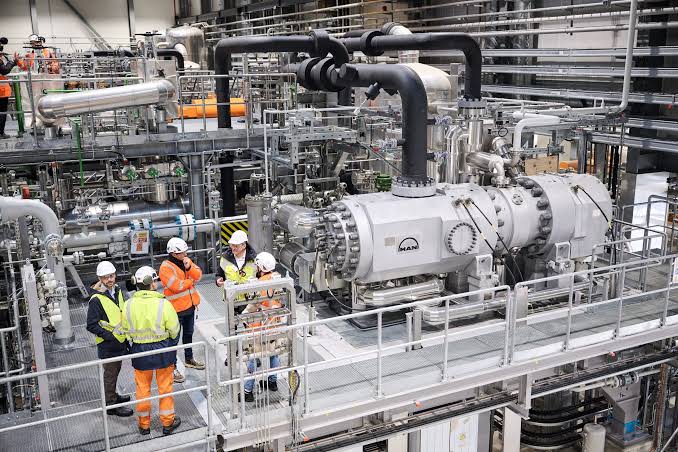
Esbjerg, Denmark, has launched one of Europe’s largest seawater district heating systems, supplying high-temperature heat with large electric heat pumps in a move away from coal-fired energy. The project, operational since late 2024, is being closely watched by other coastal cities including Stockholm and Monaco as a blueprint for sustainable urban heating.
During winter tests, Esbjerg’s system drew in seawater at 3.3°C and discharged it at 1.2°C. Two industrial heat pumps consumed 19.9 MW of electricity to deliver 55.2 MW of heat at a district-heating temperature of 90°C. This yielded a coefficient of performance (COP) of 2.8, meaning nearly three units of heat were produced for every unit of electricity consumed.
With electricity priced at €100 per MWh, the useful heat cost was calculated at €36 per MWh—a figure that positions seawater district heating as a competitive and sustainable alternative for cities seeking to decarbonise. The installation’s nominal capacity is 70 MW, supporting Esbjerg’s transition away from coal.
The initiative has implications for energy policy across Europe and Latin America, where many urban areas are exploring district heating as a strategy for reducing emissions and energy costs. Esbjerg’s example demonstrates the operational viability of using low-temperature seawater for high-temperature heating, and the city’s experience is informing similar projects in Stockholm and Monaco, both of which are advancing their own seawater-based heating solutions.
However, the expansion of seawater heat pump systems is not without challenges. Operators must confront risks such as corrosion and biological fouling of marine equipment, as well as potential environmental impacts from colder water discharge into coastal zones. High upfront costs for distribution infrastructure also remain a barrier in regions without existing heating networks.
Despite these hurdles, the Esbjerg project underscores the opportunities for hot-water storage, optimized energy consumption, and increased investment in renewable heating. As cities look to replicate the model, long-term performance data and environmental impact assessments will be critical for scaling the technology across Europe and beyond.