Santander Sees a New Investment Cycle Emerging in Argentina
The Spanish banking group is providing long-term financing to Argentine energy and mining projects for the first time, reflecting growing confidence in the country’s reforms and productive sectors. Credit expansion, however, will depend on policy continuity and the return of domestic savings to the formal financial system.

Banco Santander is adopting a more bullish position on Argentina as economic stabilisation, regulatory reforms and investment in natural resources begin to reshape the country’s commercial outlook.
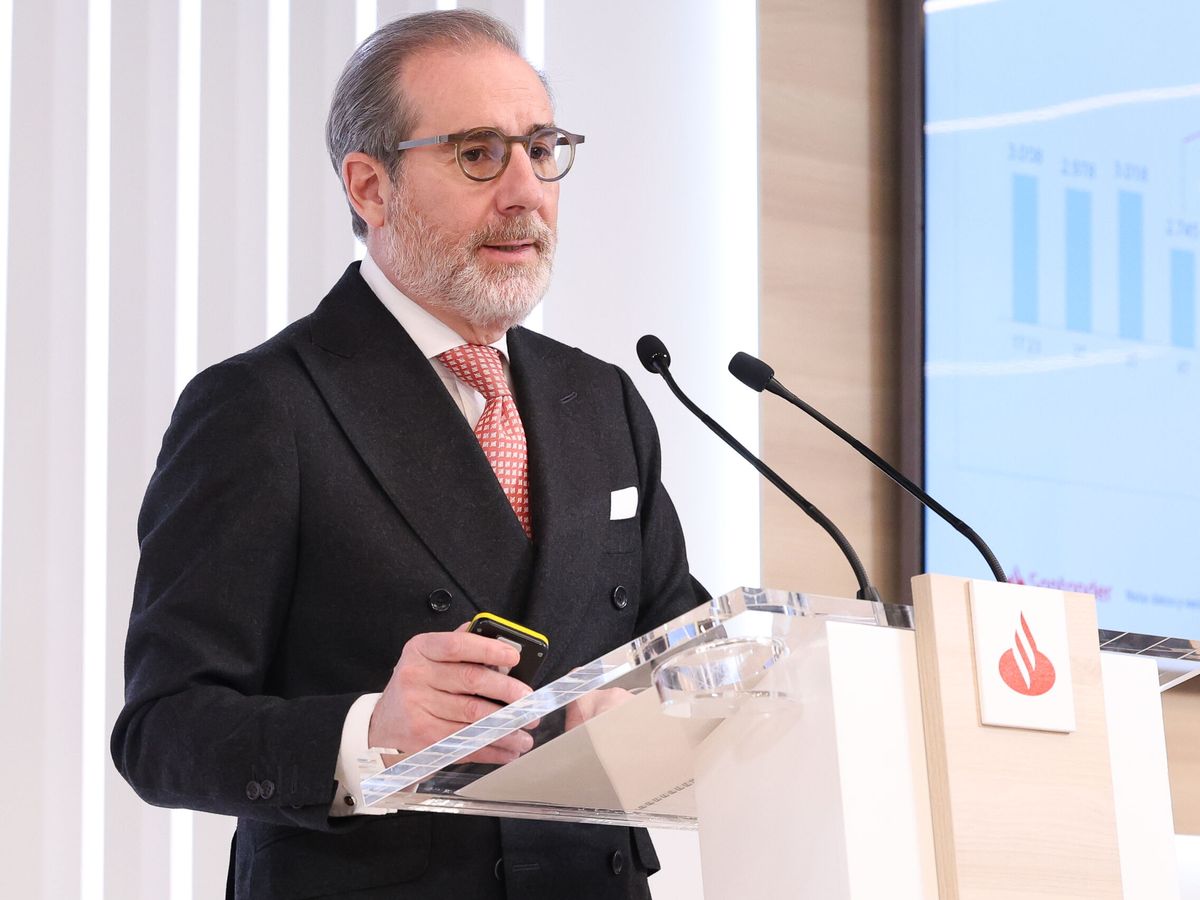
Speaking during Argentina Week in Paris, Santander Group CEO Héctor Grisi said the Spanish bank had moved beyond viewing the country primarily as a stabilisation story and was now identifying a broader investment opportunity.
“We really like what we are seeing in Argentina,” Grisi told an audience of government officials, provincial governors and business leaders at the headquarters of the Organisation for Economic Co-operation and Development.
The change is beginning to affect Santander’s lending activity. While the bank’s Argentine exposure has traditionally included substantial financing for agriculture and food production, it is now increasing its involvement in energy and mining.
For the first time, the group is providing long-term financing to projects in these sectors—a significant development in a market where macroeconomic volatility and limited access to capital have historically restricted the availability of extended credit.
Santander has operated in Argentina since the early 1990s. Grisi stressed that the group evaluates the country over periods of 20 or 30 years rather than reacting exclusively to short-term political and economic cycles.
Energy and mining widen the financing opportunity
Argentina’s energy and mining sectors are emerging as central components of its investment proposition.
Development of Vaca Muerta, new liquefied natural gas infrastructure and the expansion of lithium, copper and gold projects could require substantial financing over the coming decade. These industries also offer the country an opportunity to increase exports and generate foreign currency beyond its traditional agricultural base.
Santander’s decision to extend longer-term financing suggests that international banks are beginning to see greater potential for projects capable of generating export revenue and operating under more predictable investment frameworks.
The bank is also promoting Argentina among international clients and investors. According to Grisi, the country is appearing more frequently in conversations with global capital providers, while Santander is bringing companies and potential investors into the market to evaluate opportunities directly.
That interest does not eliminate Argentina’s longstanding risks. Large projects still depend on regulatory continuity, infrastructure, access to foreign currency and confidence that current reforms will survive future political cycles.
The durability of the changes will therefore be as important as their initial impact.
Credit could expand faster than the economy
Argentina’s low level of financial intermediation represents another potential source of growth for Santander and other banks.
Domestic credit as a proportion of gross domestic product remains significantly below the levels recorded in Brazil, Chile and Mexico. Years of inflation, currency depreciation and economic instability discouraged long-term saving and lending, leaving households and companies with limited access to mortgages, investment loans and working capital.
Grisi believes the financial system could grow at roughly twice the pace of the wider economy as stability improves and demand for financing recovers.
A critical factor will be whether Argentines begin returning savings held outside the domestic banking system. The country has a large stock of privately held dollars, but much of that capital remains outside formal financial channels or abroad.
If confidence increases and part of those savings returns to deposits and investment products, banks could gain a larger funding base with which to finance companies, infrastructure and households. Grisi cautioned that such a change would take time, but said it could substantially alter the financial landscape over the next two or three years.
OECD highlights progress and remaining weaknesses
The OECD expects Argentina’s economy to expand by 2.6% in 2026 and 3% in 2027, supported by lower inflation and stronger exports from agriculture, energy and mining.
The organisation has also recognised improvements in the country’s regulatory framework. Argentina had one of the most restrictive product-market systems among the economies assessed by the OECD in 2019, but subsequently recorded one of the sharpest improvements.
Structural weaknesses nevertheless remain.
Between 2011 and 2025, Argentina’s annual economic growth averaged only 0.8%, compared with 2.2% across the OECD. Labour productivity also declined during much of the previous decade, while shortcomings in education and shallow capital markets continue to limit long-term development.
Argentina’s OECD accession process could provide an external mechanism for consolidating reforms and increasing institutional predictability. The review involves 25 committees examining areas ranging from investment and competition to governance, education and financial regulation.
For Santander, the emerging opportunity is therefore linked not only to Argentina’s natural resources but also to its ability to rebuild credit, deepen its capital markets and maintain consistent rules.
The bank’s move into long-term energy and mining finance offers a tangible indication that international confidence is beginning to translate into financial activity. Whether that becomes a lasting investment cycle will depend on Argentina’s capacity to turn early reforms into durable institutions.